
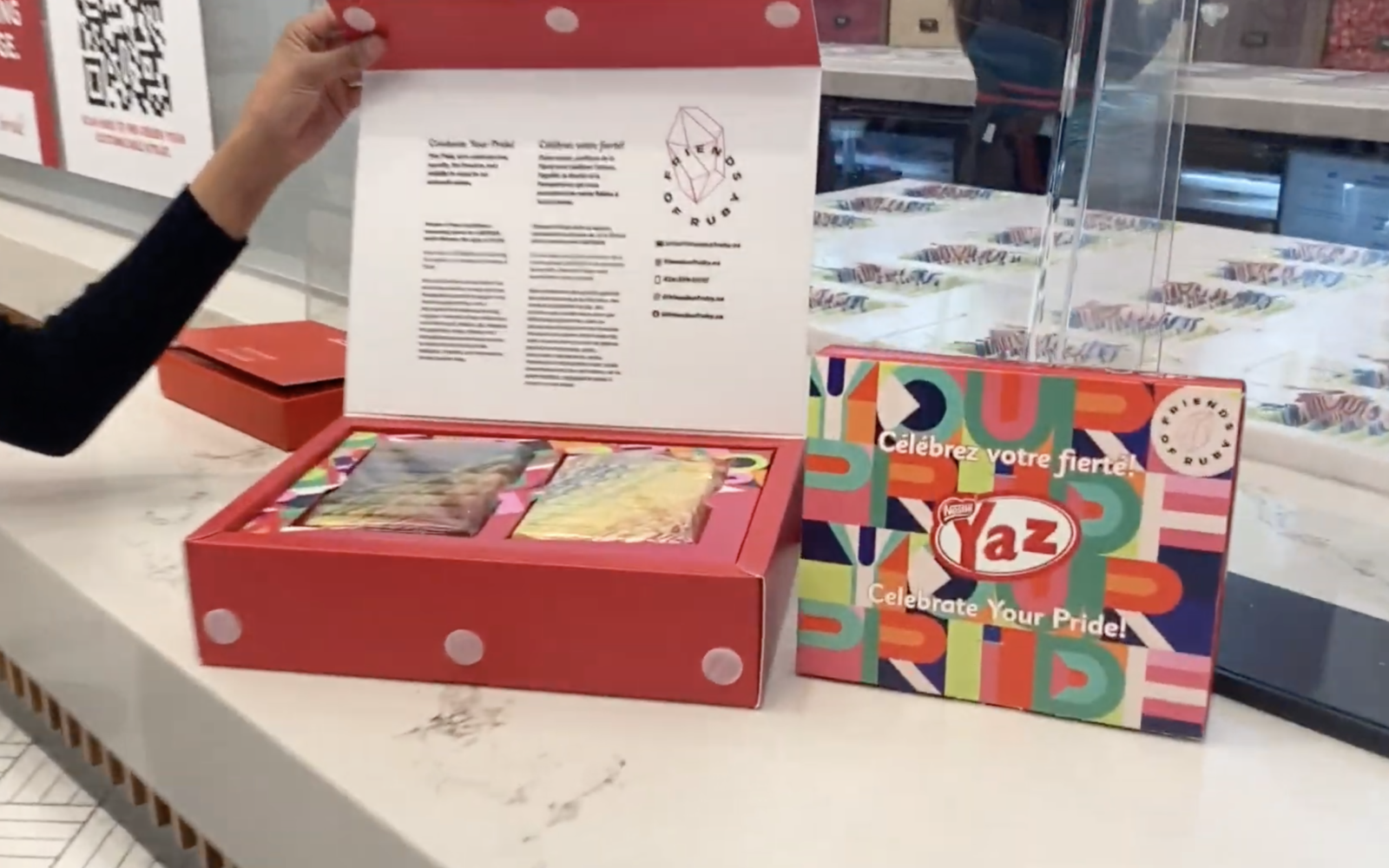
The Concept
Nestlé wanted to celebrate Pride Month with KitKat in a way that matched the message: individuality. Not just a Pride-themed box. Not just a limited edition. A box where every single unit was different. Every person who bought one would have something unique. A custom KitKat experience at scale. Millions of boxes, all one-of-a-kind. The challenge? Make that technically possible.
The Complexity
This wasn’t packaging design. This was technology meets manufacturing. The
Influencer Angle:
- Custom KitKat bars with influencer names printed in the KitKat logo
- Using the actual KitKat font to maintain brand integrity
- Matching cartons with personalized branding
- Precision printing at the bar and box level
The Consumer Angle (The Real Innovation):
- Partner with HP to develop a variable printing algorithm
- Each box rolling off the press would be algorithmically different
- Design elements changing: colors, shapes, patterns
- Every single consumer box unique — no two boxes identical
- Millions of units, all one-of-a-kind
The Technical Challenge: This meant bringing together multiple disciplines:
- Designers — creating base designs that could be algorithmically varied
- Programmers — developing the algorithm that would generate variation across millions of units
- HP Engineers — integrating the algorithm into their variable digital press
- Manufacturers — understanding how variable printing affects production
- Finishers — handling unique boxes through die-cutting, gluing, and finishing
- Quality Control — ensuring each unique variation met brand standards
One mistake in the algorithm? Millions of boxes could be unusable. One miscommunication between teams? The whole timeline collapsed.
The Execution
Phase 1: Algorithm Development
We worked with HP and Nestlé’s creative team to define the algorithm parameters:
- Which design elements could vary (colors, patterns, shapes)
- Which had to stay consistent (KitKat logo, brand messaging)
- Color palette constraints (staying true to Pride themes)
- Variation limits (keeping it recognizable as KitKat)
The algorithm had to be smart enough to create beauty through variation, not just randomness.
Phase 2: Influencer Production Parallel to the algorithm work, we were producing personalized boxes for influencers:
- Custom bars with names in the KitKat font
- Matching cartons with influencer branding
- Small runs, high precision, high stakes
- These boxes were going to celebrities and content creators — they had to be perfect
Phase 3: Test Runs
Before committing to millions of boxes, we ran test batches through the HP press:
- Print 1,000 boxes with the algorithm
- Hand-inspect samples
- Check color consistency
- Verify design variation was hitting the mark
- Make adjustments to the algorithm
This meant iterating the algorithm multiple times. Each iteration meant running new test batches. Each test batch meant coordinating between programmers, HP, and the manufacturing team.
Phase 4: Full Production
Once the algorithm was locked, we ran the full production:
- Millions of boxes rolling through the HP variable digital press
- Each one algorithmically unique
- Real-time quality monitoring
- Finishing and packing for consumer distribution
Phase 5: Influencer Delivery
While consumer boxes were rolling, influencer boxes were being hand-packed and shipped:
- Premium packaging for influencer gifts
- Personal touches
- Delivered in time for Pride Month launches
Result:
- Millions of unique consumer boxes (no two identical)
- Custom influencer boxes perfect and on-time
- Algorithm worked flawlessly at scale
- Brand recognition maintained across all variations
- Campaign was a massive success
- Consumers loved the uniqueness
The Lesson
Innovation at scale requires coordination across disciplines.
This wasn’t just a packaging job. It was:
- Creative vision (individuality through design)
- Technology (algorithm development)
- Engineering (integrating with HP’s press)
- Manufacturing expertise (understanding how variable printing affects production)
- Quality control (ensuring uniqueness didn’t compromise quality)
Any one of these pieces failing meant the whole project failed. We had to speak the language of designers, programmers, engineers, and manufacturers. We had to translate between them. We had to ensure the creative vision didn’t get lost in the technical execution.
That’s what separates basic packaging from innovation. If you have a concept that requires technology, manufacturing, and creative vision to work together, we know how to orchestrate it. We’ve done it at the scale of millions of units.